Sarojini Digital Concert Program
Artist Statement
Since it began 57 years ago, a VocalEssence season has always included great choral music of the past alongside exciting new music of our own time. This opening concert celebrates that tradition, featuring music composed more than a century ago by the English composer Gustav Holst, combined with works by two rising stars of today, both with lineage from India!
Gustav Holst is best known for his symphonic piece The Planets, and his choral music has been performed on a number of VocalEssence seasons, including Hymn of Jesus, his chamber opera Savitri, and many of his a cappella choral works. Holst was fascinated by Indian culture and devoted time to learning Sanskrit, which led to his interest in the Rig Veda—the earliest sacred book of India, a collection of Vedic Sanskrit hymns, and one of the four canonical Hindu texts known as the Vedas. One of Holst’s earliest orchestral works was a symphonic poem about the Indian god Indra. Around the same time, he composed four sets of Choral Hymns using texts from the Rig Veda. During World War I, Holst was invited to teach at Harvard University, where he composed a set of six pieces for the Harvard Glee Club, including Good Friday. His setting of the ancient text Nunc dimittis came when he was asked to compose for the choir of Westminster Abbey—composers often enjoy being invited to write for a specific choir!
Reena Esmail’s work was performed by the VocalEssence Chorus this past May during their Mending the Sky concert. In She Will Transform You, Esmail reflects on the role a child of two cultures has in bridging the divide between them and her own experience being both “other” and at home in both America and India. Shruthi Rajasekar’s vibrant Jayjaykar was heard in 2018 on our Welcome Christmas concert—a world premiere.
Sarojini received its premiere in 2022 in England by the Hertfordshire Chorus, under its conductor David Temple, for the 75th anniversary of Indian independence, and today’s performance marks the United States premiere. The title refers to Sarojini Naidu, a political activist, artist, and advocate for women’s rights who played a significant role in India’s fight for freedom from British rule. Shruthi Rajasekar has composed a work that brings together singers, orchestra, and Indian classical musicians. The composition features ragas performed by the Indian classical musicians, while the chorus and orchestra perform Indian musical elements. Most of the text comes from Sarojini Naidu’s own writings, poetry, and public speeches.
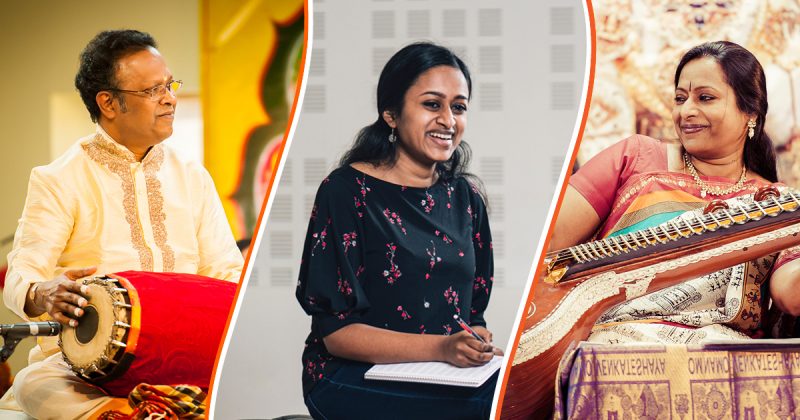
The work is in five movements: Kalaakaar – The Artist (Sarojini’s activist vision); The Gift of India (a reflection on the suffering and resilience of a nation under colonial rule); The Real Nation-Builders (the role of women in shaping policy); Swaraj – Independence (the national movement advocating for self-rule); and The Dreams That Remain (Sarojini’s final reflections, holding fast to hope for the future). A unique feature of Sarojini is the inclusion of two of the world’s foremost Indian Carnatic musicians: veena and vocal soloist Nirmala Rajasekar, and percussionist Thanjavur K. Murugaboopathi. It is a joy that this work, which Phillip Shoultz and I first discussed with Shruthi three years ago, will now become a reality in Minnesota with VocalEssence!
—Phillip Brunelle
Artistic Director and Founder, VocalEssence
PROGRAM
Indra
Gustav Holst (1903)
Metropolitan Symphony Orchestra
Two Choral Hymns from the Rig Veda, Set 3
Gustav Holst (1912)
VocalEssence Ensemble Singers Sopranos and Altos; Min Kim, harp
Good Friday
Gustav Holst (1916)
VocalEssence Ensemble Singers Tenors and Basses
Nunc Dimittis
Gustav Holst (1915)
VocalEssence Ensemble Singers
Jayjaykar!
Shruthi Rajasekar (2018)
VocalEssence Chorus
She Will Transform You
Reena Esmail (2023)
VocalEssence Chorus; Inna Staneva, flute
15 MINUTE INTERMISSION
Sarojini Prelude
Nirmala Rajasekar and Thanjavur K. Murugaboopathi
Sarojini*
I: Kalaakaar (The Artist)
II: The Gift of India
III: The Real Nation-Builders
IV: Swaraj – Independence
V: The Dreams That Remain
Shruthi Rajasekar (2022)
VocalEssence Chorus and Ensemble Singers
*U.S. Premiere
Texts and Translations
INDRA
Gustav Holst (1903)
Indra is a symphonic poem based on a story from the Rig Veda about Indra, the Indian god of the heavens, rain and storm, and his conflict with the dragon Vrita, who seized the rain clouds and caused a terrible drought. With the help of Vishnu (the god of preservation), Indra eventually defeats Vrita and the rain returns; the people rejoice and hail him for saving them.
TWO CHORAL HYMNS FROM THE RIG VEDA, SET 3
Gustav Holst (1912)
I. Hymn to the Dawn
Hear our hymn, O Goddess,
Rich in wealth and wisdom,
Ever young yet ancient,
True to Law Eternal.
Wakener of the songbirds,
Ensign of the Eternal,
Draw thou near, O Fair One
In thy radiant Chariot.
Bring to her your offering;
Humbly bow before her:
Raise your songs of welcome
As she comes in splendor.
II. Hymn to the Waters Flowing
from the firmament forth to the ocean,
Healing all in earth and air, never halting.
Indra, Lord of Heaven formed their courses,
Indra’s mighty laws can never be broken.
Cleansing waters flow ye on, hasten and help us.
Lo, in the waters, dwelleth One,
Knower of all on earth and sea,
Whose dread command no man may shun,
Varuna, sovereign Lord is He.
Onward, ye waters, onward hie,
Dance in the bright beams of the sun,
Obey the ruler of the sky
Who dug the path for you to run.
Flowing from the firmament…
GOOD FRIDAY
Gustav Holst (1916)
Alone to sacrifice Thou goest, Lord,
Giving Thyself to death whom Thou hast slain.
For us Thy wretched folk is any word,
Whose sins have brought Thee to this agony?
For they are ours, O Lord, our deeds, our deeds, Why must Thou suffer torture for our sin?
Let our hearts suffer for Thy passion, Lord,
That sheer compassion may Thy mercy win.
This is that night of tears, the three days’ space,
Sorrow abiding of the eventide,
Until the day break with the risen Christ,
And hearts that sorrowed shall be satisfied.
So may our hearts have pity on Thee, Lord,
That they may sharers of Thy glory be:
Heavy with weeping may the three days pass,
To win the laughter of Thine Easter Day.
—Words by Helen Waddell from the Latin of Peter Abelard
NUNC DIMITTIS
Gustav Holst (1915)
Sung in Latin
Lord, now lettest thou thy servant depart in peace
according to thy word.
For mine eyes have seen thy salvation, which thou hast
prepared before the face of all people.
To be a light to lighten the Gentiles, and to be the glory
of thy people Israel.
Glory be to the Father, and to the Son, and to the Holy Ghost.
As it was in the beginning, is now, and ever shall be,
world without end. Amen
—Luke 2:29-32
JAYJAYKAR!
Shruthi Rajasekar (2018)
Sung in Hindi
Praise God!
Praise for our Lord, Jesus Christ
He bestows grace, He is kind
He wants only the best for everyone
He helps everyone
He embodies absolute kindness
He is slow to get angry
He loves everyone
He lifts up those who have fallen
He removes all our burdens
Your greatness is boundless
—Pastor Anil Kant
SHE WILL TRANSFORM YOU
Reena Esmail (2023)
Homeland: why do you elude me, tease me?
There, my ancestors don’t know me.
Here my neighbors say ‘go back home’ to me.
When will you let me name you, claim you?
But now, it is no longer about me—
for this newborn child,I have a plea:
Homeland, let this sweet child be,
never torture her like you’ve done [to] me.
Let her always find her way—surface streets and highways,
underpasses and bikepaths, and she will transform you
from concept to community, from skid row to safe haven.
With each milestone, let her dismantle your distance,
until one day, she arrives here
—palm tree shadow, desert dust in her eyes—
and smiles, and knows, she’s home.
—Neelanjana Banerjee
SAROJINI
Shruthi Rajasekar (2022), U.S. premiere
This large-scale musical work chronicles the breadth of Sarojini Naidu Ji’s legacy. Drawing from texts by and about Sarojini Naidu (1879-1949), and using themes from the Indian Independence movement, the composition highlights her political contributions, her artistic prowess, her advocacy of women’s rights, and her impact on India’s larger fight to be free from British imperial rule.
I. Kalaakaar – The Artist
The opening movement explores Sarojini Naidu’s early years, whose poetry became the seed of her activist vision. Shaped by the turbulence of Colonial India, her voice became the foundation for a vision of art and activism that would inspire her lifelong work for justice and freedom.
Sarojini!
As a little child, a dreamy and fanciful nature
and within herself, irrepressible stirrings of art.
—Adapted from “Foreword” in Speeches and Writings of Sarojini Naidu. 2nd edition. Madras: G.A. Natesan, 1919.
Through journeying, a mind that is open
The world revealed from dreaming in gardens
Sarojini
Imagining
कला (Kalaa), कवि (Kavi), कलाकार (Kalaakaar)
Trans: Arts, Poet, Artist
Sitting in the garden, suddenly a whole poem came to me. I wrote it down. I wrote a long poem: 1300 lines in six days. A drama of 2000 lines. I wrote a novel, I wrote fat volumes of journal.
One black night I stood in a garden with fireflies in my hair, darting restless stars. It gave me a strange emotion, as if I were not human at all but an elfin spirit. I long to catch the music of their dances and make a poem with the rhythm.
—Adapted from “Mrs. Sarojini Naidu: A Sketch” in Speeches and Writings of Sarojini Naidu. 2nd edition. Madras: G.A. Natesan, 1919.
II. The Gift of India
This movement turns to the turbulent years of Colonial India, recalling the 1857 rebellion, the partition of Bengal in 1905, and the tragic Amritsar massacre of 1919. Out of this suffering rose a collective call for independence, as voices across the land demanded the right to self-rule.
Is there aught you need that my hands withhold?
Have my hands ever withheld?
Have I ever had the chance to withhold?
You have taken your ‘gift’ of India.
Rich gifts of raiment, grain, gold.
You have taken the ‘gift’ of India.
Priceless treasures torn from my breast,
You have flung them away
Scattering them like ashes.
I have yielded everything.
And still, you take my sons.
To feed your wars, your Victory
Now they lie with their pale brows
In fields of poppies
On blood-brown meadows
Pearls in their alien graves
Can you measure the grief of the tears I weep for India?
—Adapted from “The Gift of India” in The Broken Wing: Songs of Life and Death by Sarojini Naidu. London: W. Heinemann, 1917 and from “In the Forest” in The Golden Threshold by Sarojini Naidu. London: W. Heinemann, 1905.
1857: first fight to be free. Trampled by your Royal boots.
1905: Homelands split. Families and communities wrenched apart.
1919: Peaceful persons gathered in the gardens. Peaceful persons murdered in the gardens.
Hundreds and hundreds killed— maybe a thousand.
And how many more have we now forgotten?
III. The Real Nation-Builders
Women played a central role in sustaining the movement, from producing goods for boycotts to leading protests and strikes. Their strength is personified here as Goddess Lakshmi, symbol of compassion and well-being, embodying the resilience and sacrifice of the women who carried the struggle forward.
We are weary, my heart, we are weary,
so long we have borne,
For a while let us mourn;
We will rest.
But soon we must rise
O my heart
O Mother, rise, regenerate
The fettered nations
Crave thee to lead them
O slumbering Mother
Rise and answer
Waken and be crowned
The great dawn breaks, the night is past
From age-long sleep, she wakes at last
Life and our land await their destined spring
Rise to meet the destined spring
In song and service,
In speech and sacrifice
Make an offering to Great Mother
—Adapted from “In the Forest” and “To India” in The Golden Threshold by Sarojini Naidu. London: W. Heinemann, 1905 and from “The Broken Wing” in The Broken Wing: Songs of Life and Death by Sarojini Naidu. London: W. Heinemann, 1917.
For our dear land do we offer oblation to
Goddess Lakshmi, the Lotus-Born
Grant us showers and sheaves of thy blessing
Guard the invincible hope of our nation
Keep her glory unsullied, unshorn
The Indian woman of to-day is once more awake, profoundly alive
To her destiny as the guardian of the Vision of national life
In our history, it was Indian women who’d kindle, sustain the fires of the nation.
Men have dared to say to women, “Go this far, and no further.”
Yet women soar beyond the limits, cross the waves
For we are the real nation-builders
It is not you but we who are the nation-builders
—Adapted from “Foreword” and “Lakshmi, the Lotus-Born” in The Broken Wing: Songs of Life and Death by Sarojini Naidu. London: W. Heinemann, 1917 and from “Education of Indian Women” in Speeches and Writings of Sarojini Naidu. 2nd edition. Madras: G.A. Natesan, 1919.
Lakshmim Ksheera Samudraraaja Tanayaam
लक्ष्मीम् क्षीर समुद्रराज तनयाम्
Shree Ranga Dhaameshwarim
श्रीरंग धामेश्वरीम्
Daasi Bhootha Samasta Deva Vanithaam
दासीभूत समस्त देव वनिताम्
Lokaika Deepaankuraam
लोकैक दीपांकुरॉम
Sreeman Manda Kataaksha Labhda Vibhava
श्रीमन मन्द कटाक्ष लभ्द विभव
Brahmendra Gangaadharaam
ब्रह्मेन्द्र गंगाधराम्
Tvaam Trailokya Kudumbineem
त्वाम् त्रैलोक्य कुटुम्बिनीम्
Sarasijaam Vande Mukunda Priyaam
सरसिजाम् वन्दे मुकुन्द प्रियाम् ॥
—Lakshmi Stothram, traditional Hindu prayer (performed by Carnatic vocalist only)
Trans: The gods are servants of Lakshmi, daughter of the king of the oceans. I worship You, Lakshmi, goddess of the Lotus who presides over three worlds. I pray to You, Vishnu’s beloved.
IV. Swaraj – Independence
Sarojini’s dream of a free India was also a dream of unity, embracing the plural voices and traditions of South Asia. This movement weaves in the beloved patriotic song Sare Jahan Se Accha, echoing a shared longing for independence and honoring the cultural legacies that carried that dream forward.
What makes India great?
She is true to herself
The ancient Vedic philosophies inform today’s spirit.
A nation must absorb all that is beautiful
And be enriched by others
But never dominated by an outside power
Islam is democracy
When the peasant and king
kneel side by side in prayer
These men are brothers
The union of communities
Is the Sangam— the confluence of rivers
Each with its own special culture
Even the most humble
Can dedicate their life
To uplifting their country
It does not matter who you are
Do not limit your love
Only to your kind
Your patriotism should extend to the world
I was born in Bengal, I belong to Madras
I was brought up and married in Hyderabad and there I lived.
Still I’m neither Bengali, Madrasi, nor Hyderabadi,
but I am an Indian.
—Adapted from “The Hope of Tomorrow”, “True Brotherhood”, and “Ideals of Islam” in Speeches and Writings of Sarojini Naidu. 2nd edition. Madras: G.A. Natesan, 1919.
Transliteration:
“Saare jahaan se accha, Hindositan hamaaraa
Ham bulbulein hain is ki, yeh gulsitaan hamaaraa
Mazhab nahin sikhaataa aapas men bair rakhna
Hindi hain ham, watan hai Hindositan hamaaraa”
Urdu / Hindi / English Translation
سارے جہاں سے اچھا ہندوستاں ہمارا
सारे जहाँ से अच्छा हिन्दोसिताँ हमारा
Ours is the greatest country
ہم بلبلیں ہیں اس کی، یہ گلستاں ہمارا
हम बुलबुलें हैं इसकी यह गुलसिताँ हमारा
We are the nightingales; this garden, ours
مذہب نہیں سکھاتا آپس میں بیر رکھنا
मज़्हब नहीं सिखाता आपस में बैर रखना
Religion does not teach us to hate one another
ہندی ہیں ہم، وطن ہے ہندوستاں ہمارا
हिंदी हैं हम, वतन है हिन्दोसिताँ हमारा
We are all of this homeland; India is ours
—From “Tarana-e-Hindi” by Muhammed Iqbal in Ittehad and Zamana. 1904.
N.B. The Urdu is the original version, whereas some words in the Hindi & transliteration were later adapted to fit the meter
Bhaaratha Maathaa (Mother India)
Hamaari Maathaa (Our Mother)
Maathaa Jai! (Victory to Mother!)
V. The Dreams That Remain
The work concludes with Sarojini’s final reflections, spoken just months before India’s independence. Though she mourned the divisions of her time, she never abandoned her faith in “the hope of tomorrow”—a reminder that her unfinished dream is now ours to carry forward.
Parts split
Hearts fracturing into
Independence at a cost
Freedom is not free
Seeds of division planted by our rulers
But why do they take root?
Let us gather the dreams that remain
—Adapted from “In the Forest” in The Golden Threshold by Sarojini Naidu. London: W. Heinemann, 1905.
Sarojini
SAROJINI, MOVEMENT IV
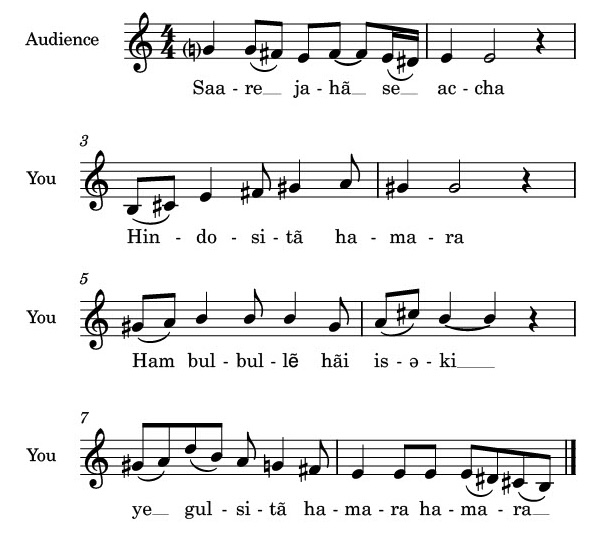
In Movement IV, we pay tribute to the great leaders of South Asian culture with a rendition of “Sare Jahan Se Accha,” tuned by maestro Pandit Ravi Shankar with words by Allama Iqbal.
We invite you to join us on this famous tune—the conductor will cue you! The choir will sing the first line—and then it’s your turn to join. Sing the song twice, then hum the tune the third time:
Biographies
NIRMALA RAJASEKAR
Veena and Vocal Soloist
Nirmala Rajasekar is one of the premier Saraswathi veena players in the world today. A dynamic performer and composer, she has appeared at leading venues in India and internationally, including Carnegie Hall, the United Nations, Sawai Gandharva Mahotsav (Pune), the Music Academy (Chennai), the Sydney Music Festival (Australia), and the Rumi International Festival (Turkey). Celebrated as a “Carnatic Ambassador,” Nirmala is known for her innovative performances, solo renditions, and collaborations that have captivated audiences globally.
Born in Chennai, Nirmala began performing professionally at age 13 and trained under renowned gurus including Prof. Kalpakam Swaminathan and Prof. T.R. Subramaniam. Her music reflects a deep parampara lineage while showcasing her unique creativity and expressive presentation.
Nirmala is also a distinguished composer, educator, and leader. She founded the Naadha Rasa Center for Music and the charitable organization Naadharasa, supporting musicians and promoting Indian classical music. She serves as Vice President of the Global Carnatic Musicians’ Association and was Chair of the Board of the American Composers Forum, the first India-born woman to hold this position.
Recipient of the Bush Fellowship, the McKnight Fellowship, the Kalaimamani Award from the Government of Tamil Nadu and the 2023 A.P. Anderson Award for contributions to Minnesota’s cultural life, Nirmala continues to inspire audiences, students, and composers worldwide.
THANJAVUR K. MURUGABOOPATHI
Mridangam
Thanjavur K. Murugaboopathi is one of the leading mridangam players of today. His technique and creative ability in accompaniment, solo renditions, and jugalbandhi collaborations with his North Indian brethren have earned him critical acclaim around the world. Hailing from a family of musicians and artists, Murugaboopathi had his initial training from T R Srinivasan. He later trained in the rare gurukula tradition (of living with one’s guru) for more than ten years with the Mridangam maestro Tanjore Upendran.
Murugaboopathi has regularly played with virtuosos in Carnatic music, including Dr. M. Balamuralikrishna, T. V. Sankaranarayanan, T. N. Seshagopalan, P.S. Narayanswamy, Dr. N. Ramani, V.V. Subramaniam, Mandolin U. Srinivas, and others. He has also collaborated with several Hindustani musicians including Sultan Khan, Shahid Parvez, and Vishwa Mohan Bhatt.
Murugaboopathi travels extensively to USA, UK, Europe, the Middle East, Singapore, Hong Kong, South Africa, Australia, and New Zealand. He has performed in several prestigious venues, including the United Nations in New York City, USA and Royal Albert Hall in London, UK.
Additionally, he has conducted educational outreach programs though lecture demonstrations, music conferences, and seminars. Murugaboopathi has also been instrumental in providing support, direction, and guidance to several arts organizations and young artists in Asia, Europe, Australia and North America. Murgaboopathi has been honored with many awards, including the Kalaimamani Award from the Government of Tamil Nadu, Best Artiste Award and the Pazhani Subramania Pillai Award from the Music Academy in Chennai, India.
STEVEN AMUNDSON
Conductor
Steven Amundson is the founding conductor of the Metropolitan Symphony Orchestra (originally called the Central Chamber Orchestra), which he led from 1982-87. He returned as the MSO’s music director in the fall of 2024. At age 25, he joined the music faculty at St. Olaf College and spent 41 years building the St. Olaf Orchestra into one of the premiere college/university orchestras in the United States. Known for his inspiring and passionate presence on the podium, Amundson is a highly sought-after conductor, clinician and adjudicator.
In addition to his tenure at St. Olaf College, Amundson held conducting posts at the University of Virginia and as Music Director of the Tacoma Youth Symphony. He served as Music Director and Conductor of the Bloomington Symphony (MN) for 13 years, and he has guest conducted professional ensembles including the Duluth-Superior Symphony, Fargo-Moorhead Symphony, Minneapolis Pops Orchestra, Minnesota Dance Theater Orchestra, Rochester Symphony and the renowned Saint Paul Chamber Orchestra.
In the 1980 International Conducting Competition in Salzburg, hosted by the Mozarteum and Austrian National Radio, Amundson placed first, earning the Hans Häring Prize. In 1992, the Minnesota Music Education Association named him “Minnesota Orchestra Educator of the Year.”
Metropolitan Symphony Orchestra
Now in its 43rd season, the Metropolitan Symphony Orchestra (MSO) shares the power of live symphonic music with the community, led by Music Director Steven Amundson. The MSO’s mission is to perform outstanding symphony concerts for diverse audiences throughout the Twin Cities.
Consider joining the MSO for one of their upcoming concerts. A French Feast, Part Deux, takes place Sunday, November 16, at Roseville Lutheran Church. The season continues in 2026 with Tchaikovsky’s Sixth in February, Sing Democracy 250 at Orchestra Hall in April, celebrating the 250th anniversary of the Declaration of Independence, and the MSO Family Concert: A Royal Treat in May, a joyful event for music lovers of all ages. Learn more at www.msomn.org.
VIOLIN 1
Barb Savereide*, concertmaster
Sofia Kaut, acting assistant
Suzanne Damberg
Valerie Drewes
Claire Ellenberger
Stephen Koehler
Polly Logan
Sylvia Middleton
Hannah Reinschmidt
Ann Sorensen
Alanna Sweeney
Sergio Zenisek
VIOLIN 2
Stephanie Swearingen*
Ildiko Fox-Gulyas**
Brenna Bast
Karen Blacik
Ellen Cornwall
Christine Larson
Sharon Munkwitz
Emily Pantel
Angela Smithson
Stephen Sweeney
VIOLA
Jeremy Cushman^
Zach Armstrong
Emily Doyle
James Hanson
Cassandra Herold
Ryan Jensen
Bridget Koehler
Lindsey Lamb
John Middleton
Alex Mueller
Kristine Oberg
CELLO
LeeAnn Thommes*
Elianna Thorne**
Benjamin Bates
Nathan Behrens
Elise Butler-Pinkham
Micah Christiansen
King Elder
Isabel Johnson
Paula Lindgren
Christine Melchert
BASS
Stuart Ronkainen*
Beatrice Grund
Bryant Huang
Bob Jennings
Henry Specker
Rahn Yanes
FLUTE
Erica Bennett Duggan*
Martha Jamsa
Mary Laurie (Piccolo)
OBOE
Julie Brusen*
Bryanne Kleinert
Mary Ann Aufderheide (English Horn)
CLARINET
Paul Schulz*
Kate Berning-Alfred
Karolina Krajewska (Bass Clarinet)
BASSOON
Kate Saumur*++
Tracy Carr
Heather Neimeyer (Contrabassoon)
HORN
Gwen Anderson^
Sam Crocker
Karen Olson
Michael Engh
TRUMPET
Joe Hazlett*
Ben Alle**
Trevor Crawford
Hollyn Fellows
TROMBONE
Gary Zielinski*
Bob Jacob
Craig Stilen (Bass Trombone)
TUBA
Perry Brennan *
PERCUSSION
Jon Lewis*
Ken Lewis*
Eric Neseth*
Kai Johnson
HARP
Nicole Christopher*
* Section Principal
** Assistant Principal
^ Acting Principal
++ Charter Member
About VocalEssence
For 57 years, VocalEssence has provided opportunities for singers from the Twin Cities area to create incredible music together and build connections as part of the vibrant arts community in Minnesota.
VocalEssence is known for introducing audiences to music and artists who are not yet known, often welcoming guest artists, composers, and conductors who are emerging, have unknown works, or represent a variety of cultures. Welcoming all members of the greater community, VocalEssence embodies the motto: Together We Sing.
VOCALESSENCE MISSION
VocalEssence draws upon the power of singing together to nurture community, inspire creativity, affirm the value of all persons, and expand the influence of choral music.
VocalEssence Artistic Staff
PHILIP BRUNELLE
Artistic Director and Founder
Philip Brunelle, artistic director and founder of VocalEssence 57 years ago, is an internationally-renowned conductor, choral scholar, and visionary. Philip has conducted symphonies, choral festivals, and operas on six continents. He holds five honorary degrees, served 9 years as Vice President of IFCM (International Federation for Choral Music), and has been recognized for his commitment to choral music by the governments of Norway, Hungary, Sweden, Mexico, and the United Kingdom. In 2019, he was awarded the American Prize in Choral Conducting and, in 2020, was given the Honorary Member Award by the Society for American Music. Last fall Philip was appointed a National Arts Associate of the Sigma Alpha Iota Music Fraternity. Philip is also Organist-Choirmaster at Plymouth Congregational Church, Minneapolis. During the pandemic Philip recorded 300 “Musical Moments” which can be accessed at vocalessence.org/category/musical-moments and his thoughts on music are at RenaissanceManpodcast.com. Philip and his wife Carolyn, a studio artist, have 3 children (Tim, Christopher, and Elise) and 7 grandchildren.
G. PHILLIP SHOULTZ, III
Associate Artistic Director
G. Phillip Shoultz, III, associate artistic director, inspires action and fosters community among people of all ages and abilities through song and spoken word. He is Artistic Director of Sing Democracy 250, a national initiative of the Together In Hope Project, and the University of Minnesota Rev. Dr. Martin Luther King, Jr. Tribute Concert. Phillip is Cantor for Worship, Music, and the Arts at Westwood Lutheran Church and serves on the faculty of the University of St. Thomas, where he leads the Graduate Choral Conducting program. Phillip gives voice to the Songs of Freedom series on Minnesota Public Radio and hosts concerts for the Minnesota Orchestra. He creates content for SonoVoice (the Fitbit for voice) and is founder of “Table for More”, a platform addressing issues of innovation, equity, racial justice, and belonging in the arts. Phillip is engaged across the U.S. and beyond as a conductor, clinician, and worship curator/leader. He is published with Galaxy Music and is the winner of numerous honors, including the ACDA Graduate Conducting Competition and multiple Teacher of the Year awards. Phillip lives in St. Louis Park with his wife, Michelle, and their two children (Malachi and Lydia Grace).
ROBERT GRAHAM
Learning and Engagement Manager
Conductor, Vintage Voices
Robert Graham is the Learning and Engagement Manager at VocalEssence where he serves as the conductor for the VocalEssence Vintage Voices choirs, and oversees the renowned VocalEssence WITNESS School Program. Robert has a Master of Music degree in both vocal performance and choral conducting from Southern Illinois University-Carbondale, and a B.A. in vocal performance from Xavier University of Louisiana. Robert currently serves as a section leader of the adult choir at Westminster Presbyterian Church in Minneapolis, sings second tenor in the VocalEssence Ensemble Singers, and also
performs around the Twin Cities as a solo and chamber musician.
CASEY RAFN
Accompanist
Pianist Casey Rafn enjoys a varied career as a collaborative pianist both in the United States and abroad, in Europe and Latin America. He is a member of ‘Trés’, whose saxophone-piano trio was just nominated for a Latin Grammy for Best Instrumental Album for their new album “Romance al Campesino Porteño.” Casey often collaborates in concert or recordings with members of the Minnesota Orchestra, the Saint Paul Chamber Orchestra, and University of Minnesota School of Music faculty. As a piano soloist he took top prizes at the International Liszt-Garrison Competition in Baltimore, has appeared with the Duluth-Superior Symphony Orchestra, and has taught at both the University of Minnesota School of Music and the St. Paul Conservatory for Performing Arts.
JOHN JENSEN
Accompanist, VocalEssence Vintage Voices
John Jensen received his music degrees in Southern California, where he attended Occidental College and University of Southern California. While there he free-lanced as a studio musician, playing on the Andy Williams show and touring the country with prominent singers through Columbia Artists Management. He moved to Iowa and taught for 15 years at Grinnell College as an artist-in-residence. In 1990, John moved to St. Paul and has played with VocalEssence, the Minnesota Orchestra, and the St. Paul Chamber Orchestra. He plays jazz and classical piano around the area, including performances with the Bloomingtones, a traveling senior choir based in Bloomington, MN. In 2023, John recorded a piano concerto by the late Paul Reale with the Yale Symphony Orchestra at Yale University which was released by Naxos records.
VocalEssence Performing Ensembles
VOCALESSENCE CHORUS
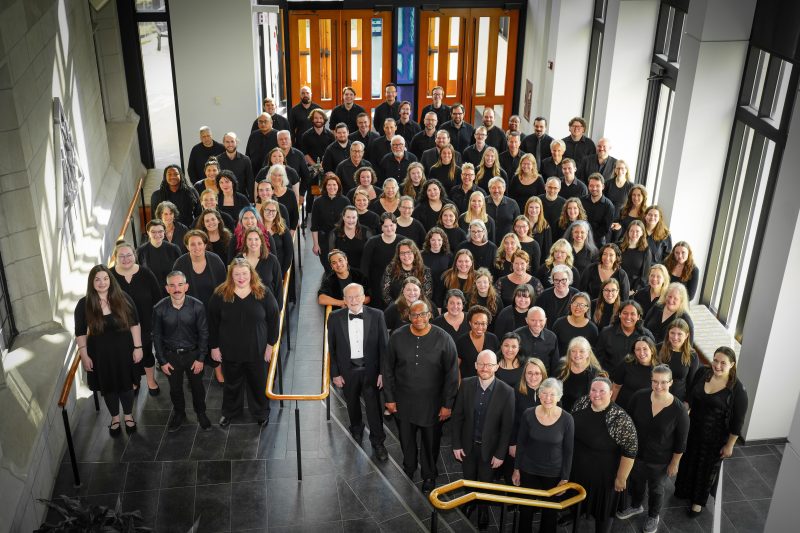
The VocalEssence Chorus is a group of talented and enthusiastic singers from many different walks of life, united by their love of singing and community. Performing a wide variety of musical styles, premiering new works, and sharing the stage with a diverse array of guest artists, the Chorus is a welcome home for singers who wish to continue making music throughout their adult lives.
SOPRANO
Ann Ambach
AnnaLisa Anderson
Madison Asher
Ashley Brandt
Kate Brinkert
Corey Cellurale
Lorinda Chagnon
Marie Colangelo
Amanda Connolly
Emily Dyrdahl
Katie Eilers
Eva Gibney-Jones
Lillian Gray
Kristina Guiffre
Becca Hovsepian
Claire Huber
Sally Jaffray
Elinor Jones
Maggie Koebele
Laura Langan
Christina Pederson
Venessa Rockwell
Alexa Rosenbaum
Mary Salveson
Emma Schlabach
Emily Seifers
Ashley Slattery
Leah Sovick
Abbie Sulik
Dana Terres
Hannah Tilstra-Frey
Amanda Troolin
Katherine True
Jen Vickerman Akaolisa
Dannika Wright
ALTO
Akosua Addo
Azure Anderson
Johanna Beaupre
Jo Beld
Maggie Driemeyer
Nancy Jo Goettl
Autumn Gurgel Valentini
Marjorie Hakala
Dee Hein
Grace Herbertz
Brie Hill
Grace Hjort
Emma Jirele Sandhurst
Katie Kovacovich
Ruby Kramer
Annie Krishnan
Jessica Laven Johnson
Jeenee Lee
Lark Lewis
Carly Lunden
Danica McDonald
Rachel Moniz
Kristi Mueller
Elizabeth Neuenfeldt
Jillian Paulson
Marty Raymond
Miriam Sahouani
Erin Sandsmark
Katie Sandsmark
Sydney Schoeberle
Alyssa Shapiro
Sarah Taft
Laura Tanner
Allie Wigley
TENOR
Erik Adolphson
Steve Aggergaard
Brett Bacon
Larry J Brandts
Bjorn Christ
Dante Colmenares
Ryan Coopergard
Alex Cox
Ben Demaree
Tim Emery
James Feltes
Kurtis Parlin
Peter Schattauer
BASS
Johann Albrecht
Robert Atendido
Seth Bresky
David Castro
Garret Fettig
Adam Hecker
Russ Kaplan
Evan Kelly
Jordan Kiffmeyer
Devin Knopf
Phil Lowry
John Mai
Nicholas Marcouiller
Thomas Mondry
Nick Mroczek
Milo Oien-Rochat
Brian Ruhl
Trent Stenoien
Jacob Weindling
VOCALESSENCE ENSEMBLE SINGERS
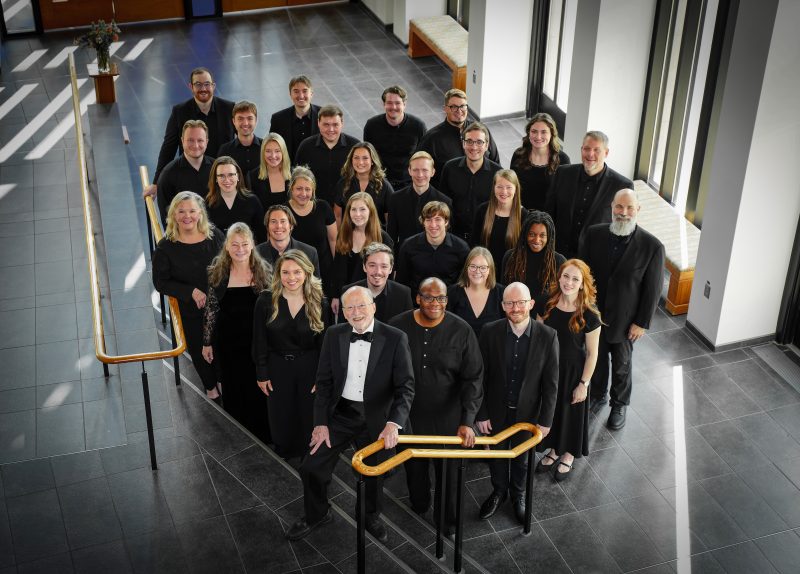
The VocalEssence Ensemble Singers have established an international reputation because of their extensive catalog of recordings and broad range of unique repertoire. This chamber choir, whose members hail from a wide variety of professions, is bound together by their skilled artistry to create what The Times of London has described as a “flawless” sound.
SOPRANO
Jennifer Bevington
Katie Boardman
Elsa Buck
Chloe Johnson
JoAnna Johnson
Kathryn Rupp
Mari Scott
Carey Shunskis
ALTO
Robin Joy Helgen
Patty Kramer
Audrey Lane-Getaz
Anna Meek
Judith Melander
Carolyn Nuelle
Kristina Rodel Sorum
Cat Terres
TENOR
Will Berendsen
Ben Brunnette
Jared Campbell
Eli Gatlin-Baumgartner
Robert Graham
Jonah Herzog
Andy McCullough
Phil Reilly
BASS
Dakota Anderson
Joe Ellickson
David Gindra
Joe Kastner
Erik Krohg
Dr. Michael P. Schmidt
Benjamin Shermock
Ian Witry
VOCALESSENCE SINGERS OF THIS AGE
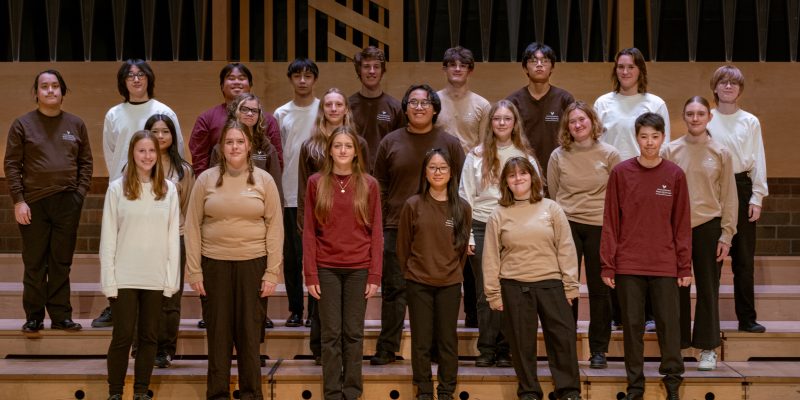
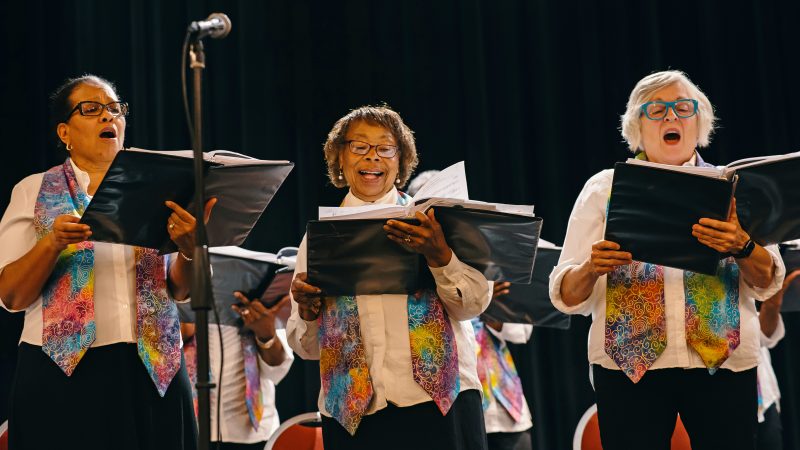
The VocalEssence Singers Of This Age (SOTA) is a community of Twin Cities teenagers engaged in expanding what it means to be a choir and, encouraging a wider circle of participation in the artform. Presenting music ranging from classical to hip-hop, they use creativity and collaboration to build an accepting community, equipped with the skills to lead social change in our society.
VOCALESSENCE VINTAGE VOICES